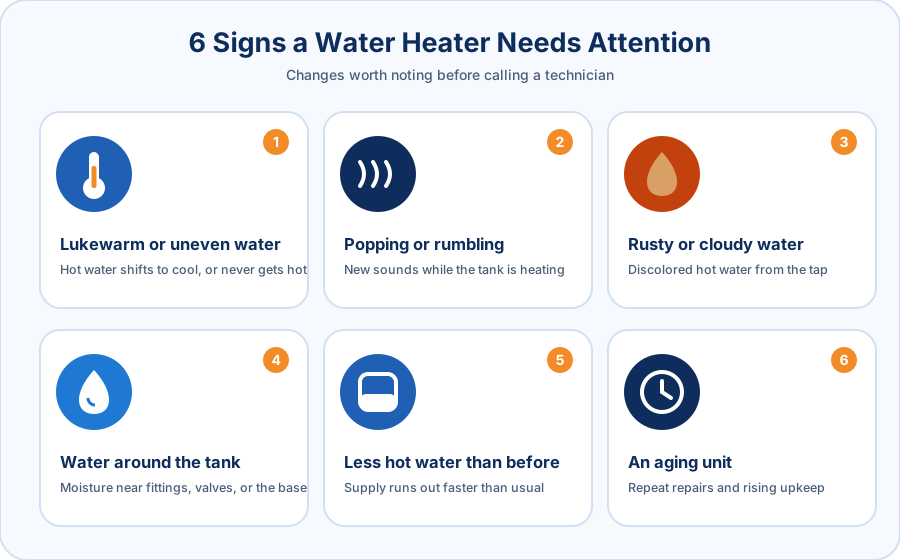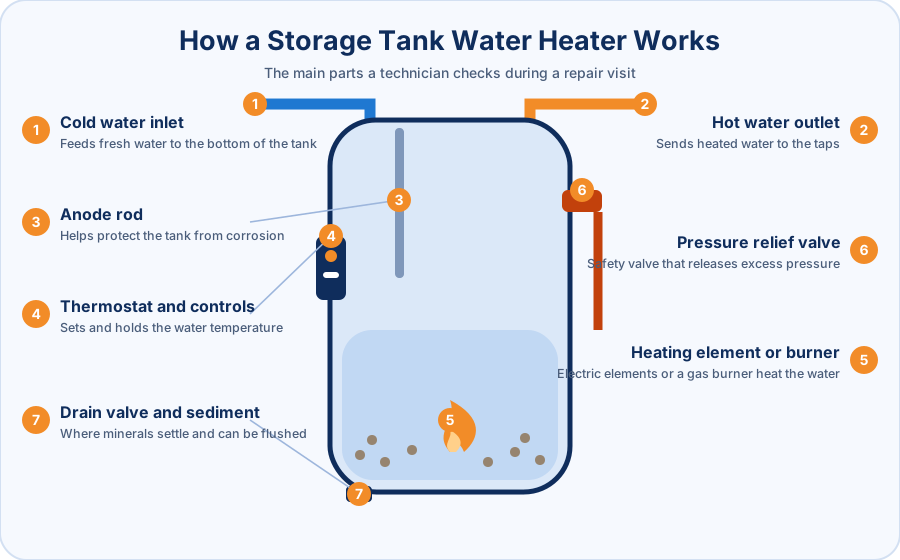
The thermostat tells the unit when to heat and when to stop. When it drifts or fails, water may turn lukewarm, run too hot, or change temperature without warning.
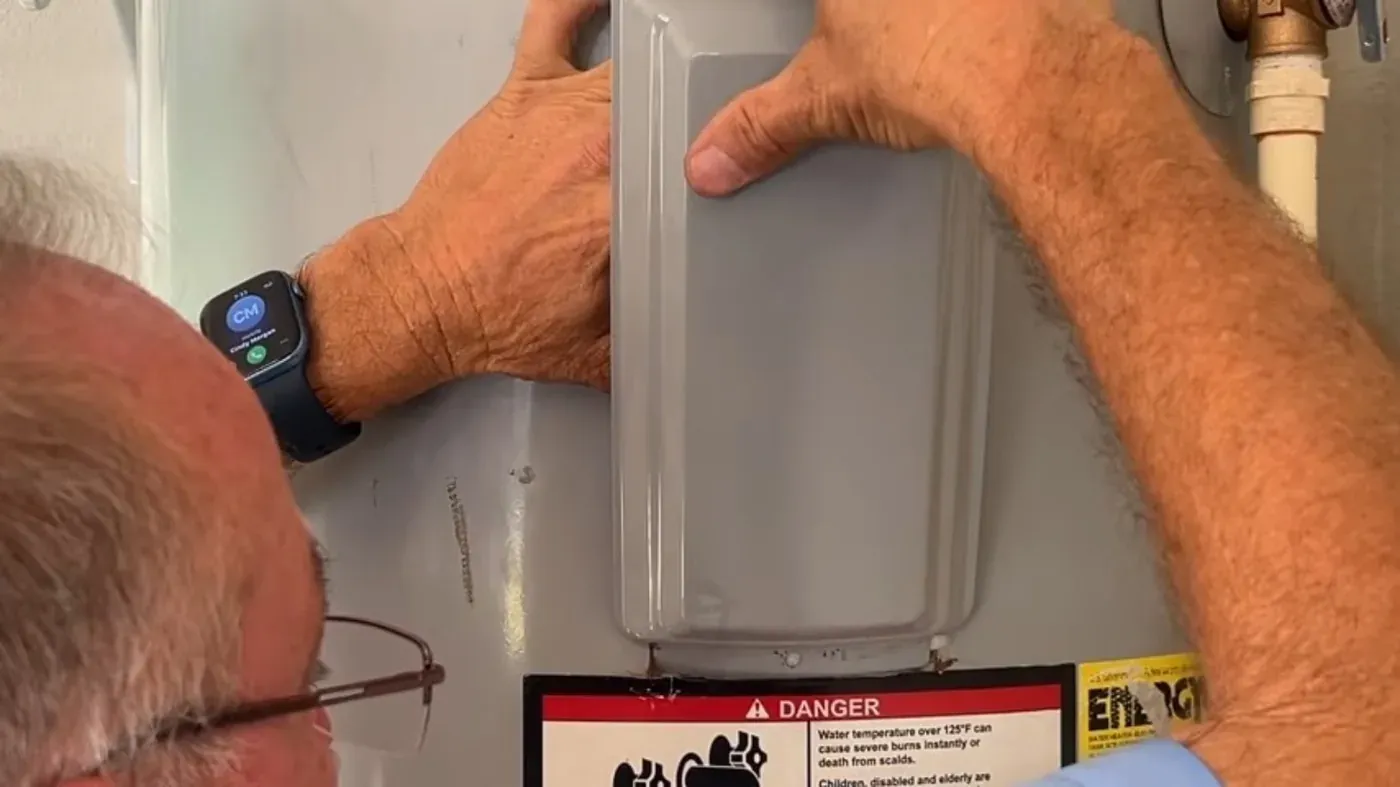
On electric tanks the thermostats sit behind access panels next to the elements, and on gas units a control valve plays a similar role.
Symptoms of Thermostat Trouble Worth Noting
- Water that is too hot or never gets hot enough
- Temperature that swings during a shower
- A tripped high-limit reset button
- Heating that runs constantly or not at all
Checking and Replacing Faulty Heater Controls
A technician tests thermostats and the high-limit switch with a meter, confirms the settings, and replaces any part that is out of tolerance. Compatibility with the exact model matters.
Safety Points for Temperature Settings and Panels
High water temperature can cause scalds, so settings should be checked carefully. Switch off power before opening any access panel.
Thermostat Questions to Ask Before Any Repair
- Is the thermostat or the heating element at fault?
- Which temperature setting is appropriate for the home?
- Is the replacement part matched to this model?
- Were wiring and insulation inspected?
Where to Go Next After Reading About Thermostat Repair
Nearby topics include electric unit repair, no hot water, sediment flushing, and replacement. Return to the Littleton hot water repair overview or browse all service topics to compare options.
Quick Answers on Thermostat Repair for Littleton Homes
Can a thermostat be replaced without replacing the unit?
Yes. Thermostats are standard replacement parts on many models.
Why does the water change temperature mid-shower?
A failing thermostat, sediment, or an element problem can all cause swings, so testing is needed.
What temperature is recommended?
Settings vary by household. A technician can help choose a safe and comfortable setting.
Is the reset button a permanent fix?
No. A tripped reset button signals an underlying issue that should be found.