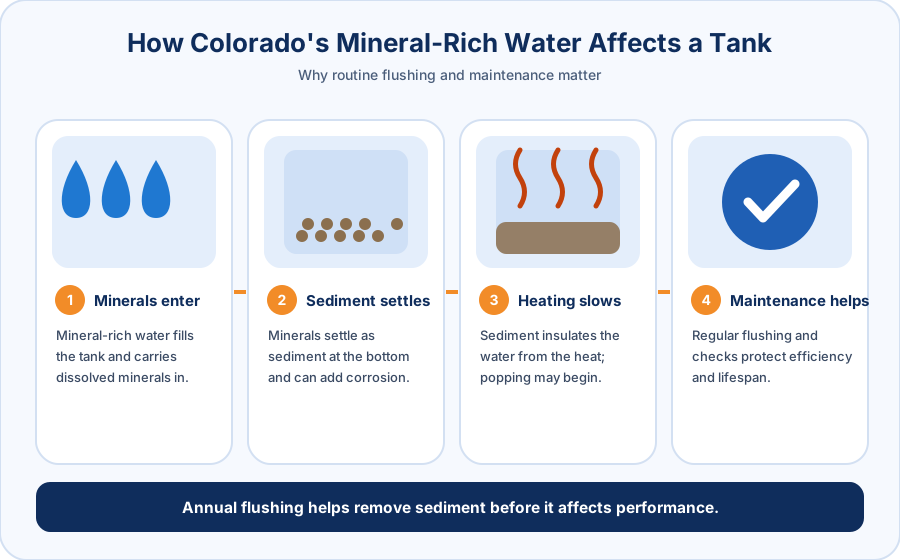
Colorado's mineral-rich water accelerates sediment accumulation and corrosion, which makes regular maintenance particularly important in this region.
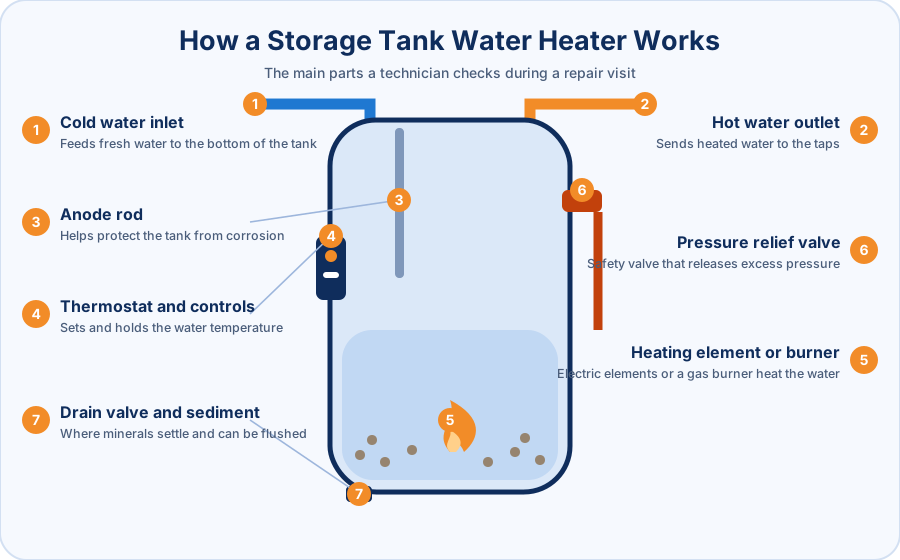
Flushing removes settled minerals from the bottom of the tank, which can improve heating efficiency, support water quality, and help the unit last.
Signs Sediment Is Building Up Inside the Tank
- Popping or rumbling sounds while heating
- Hot water that runs out sooner than before
- Cloudy or gritty water from hot taps
- Higher energy use without another cause
What a Sediment Flush Involves for the Tank
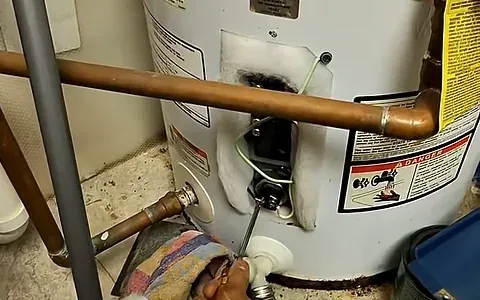
A technician shuts off power or gas, connects a hose to the drain valve, and flushes the tank until the water runs clear. Inspection of the drain valve and a performance check follow.
How Often a Tank Should Be Flushed Each Year
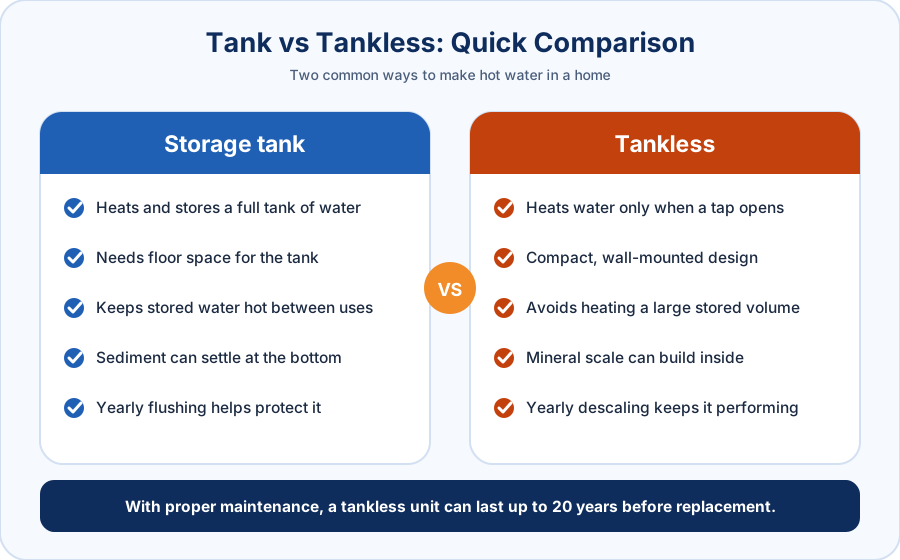
A yearly flush is the common recommendation, with more frequent checks for heavy sediment. The same applies to tankless units, which need descaling.
Sediment Flushing Questions to Ask Beforehand
- How much sediment is present, and how often should it be flushed?
- Is the drain valve in good shape?
- Has the buildup affected the elements or burner?
- What maintenance schedule fits local water?
Related Guides for Sediment Flushing in Littleton
Nearby topics include noise diagnosis, electric unit repair, tankless repair, and no hot water. Return to the Littleton hot water repair overview or browse all service topics to compare options.
Sediment Flushing FAQs for Littleton Homeowners
Is flushing safe for older tanks?
It is usually helpful, though a very old tank with heavy buildup may need a cautious approach. A technician can advise.
How can sediment be recognized?
Popping sounds, reduced supply, and cloudy water are common signs.
Does flushing fix every noise?
Sediment is a common cause, but other problems can sound similar, so inspection helps.
Do tankless units need flushing?
Yes. Descaling yearly keeps them performing.