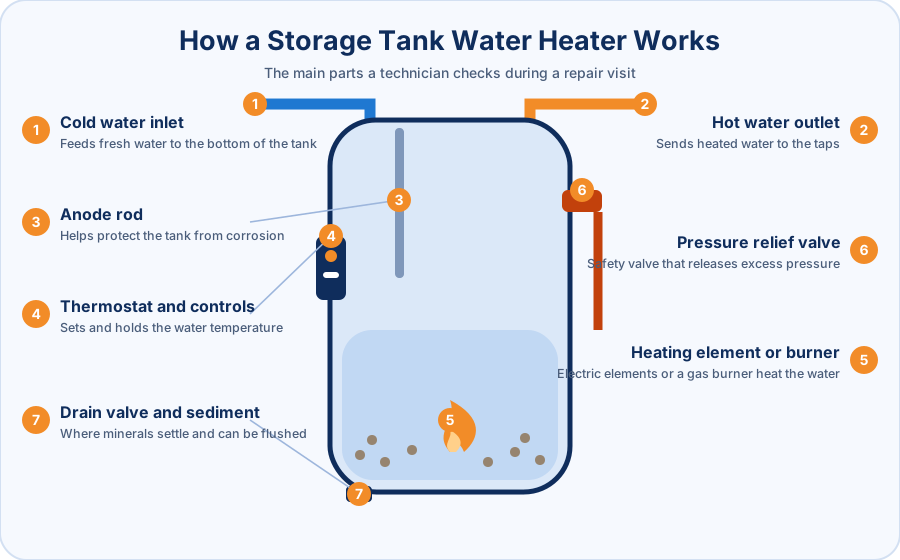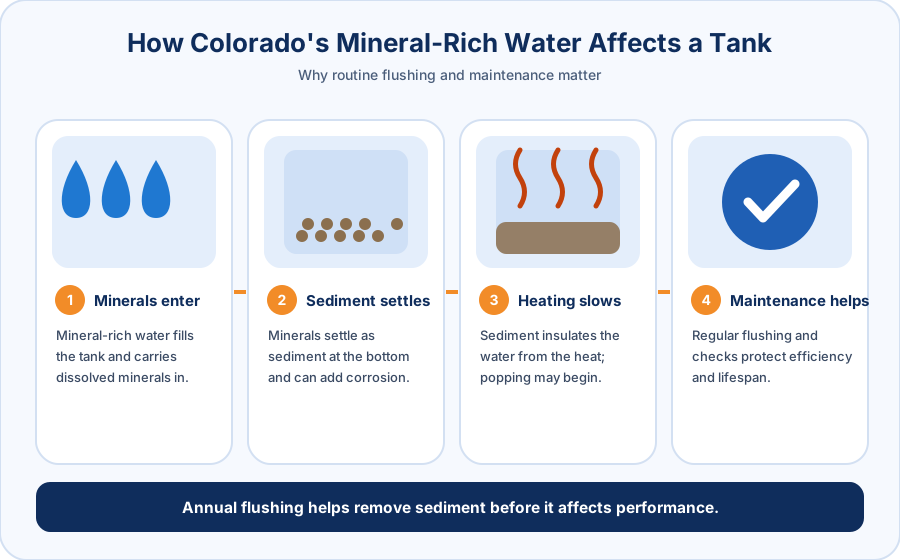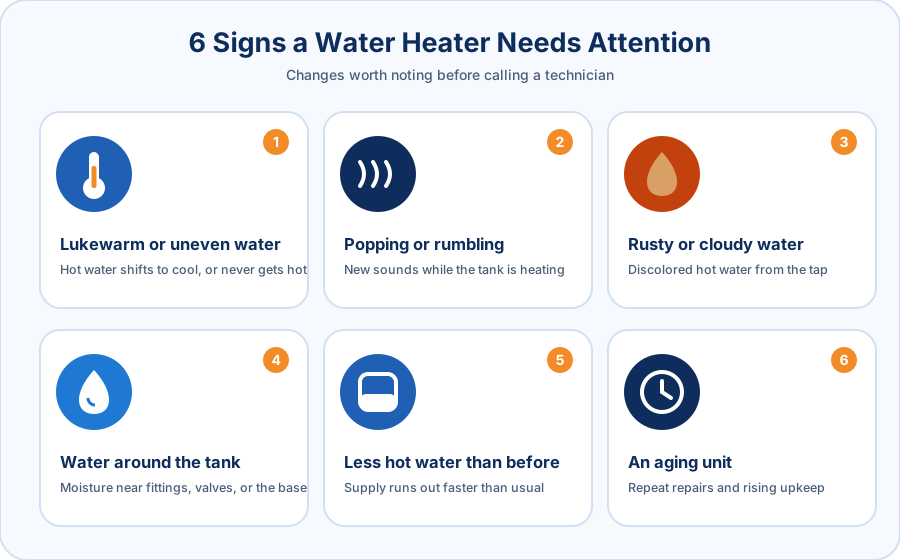
A tank that begins to make new sounds is communicating something. Popping and rumbling usually come from sediment, while hissing or sizzling can indicate water touching a hot element or a small leak.
Noting when the sound happens helps narrow the cause quickly.
What Different Heater Sounds Can Actually Mean
- Popping or rumbling: sediment trapped under the water
- Sizzling: water dripping onto a hot surface
- Humming or buzzing: loose element or electrical part
- Banging in pipes: water hammer or pressure changes
How the Source of the Noise Is Found by a Technician
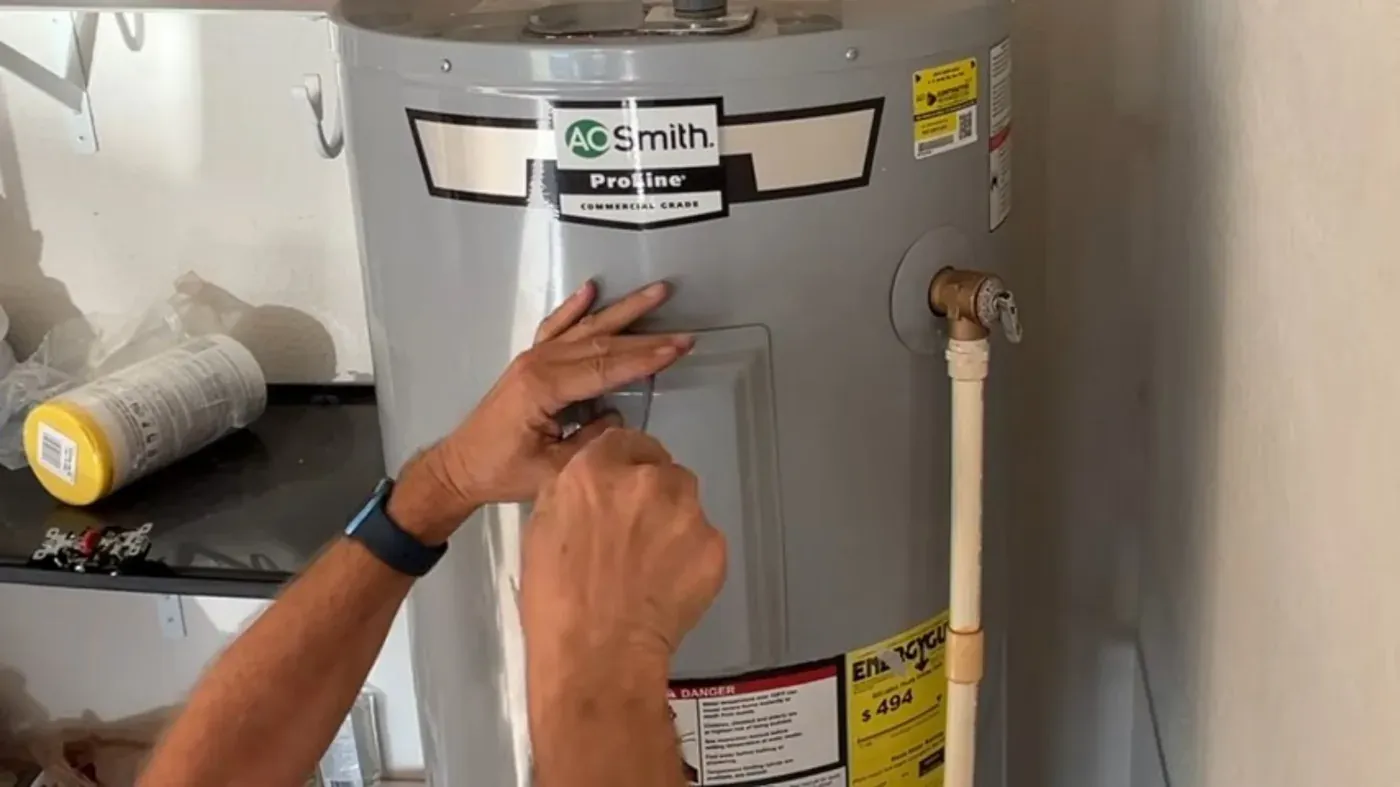
Technicians listen during a heating cycle, inspect the tank bottom and elements, and check pressure and connections. Matching the sound to a cause avoids unnecessary parts.
When a Noise Calls for Prompt Attention at Home
A sound that grows louder, comes with leaks or odd smells, or follows a loss of hot water should be checked soon.
Noise Questions to Ask Before Any Repair Work
- When does the sound occur during heating?
- Is sediment the likely cause?
- Could pressure or water hammer be involved?
- What maintenance would reduce the sound?
More Reading Connected to Noise Diagnosis in Littleton
Nearby topics include sediment flushing, relief valve repair, electric unit repair, and replacement. Return to the Littleton hot water repair overview or browse all service topics to compare options.
Common Questions About Noise Diagnosis for Littleton Homes
Is a noisy tank dangerous?
Not always, but sounds paired with leaks, odors, or pressure issues should be checked quickly.
Why does the tank pop while heating?
Sediment traps water beneath it, which steams and pops as it escapes.
Can flushing quiet a noisy tank?
Often yes when sediment is the cause.
Does noise mean replacement?
Rarely by itself. Diagnosis shows whether repair or maintenance fits.