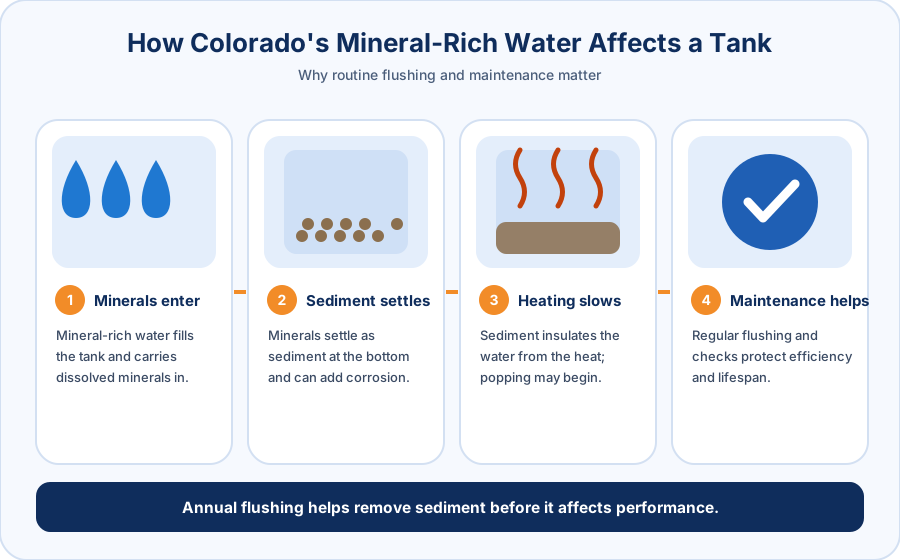
Colorado's mineral-rich water accelerates sediment accumulation and corrosion, which makes regular maintenance particularly important in this region.
Signs of Sediment Buildup Inside the Tank
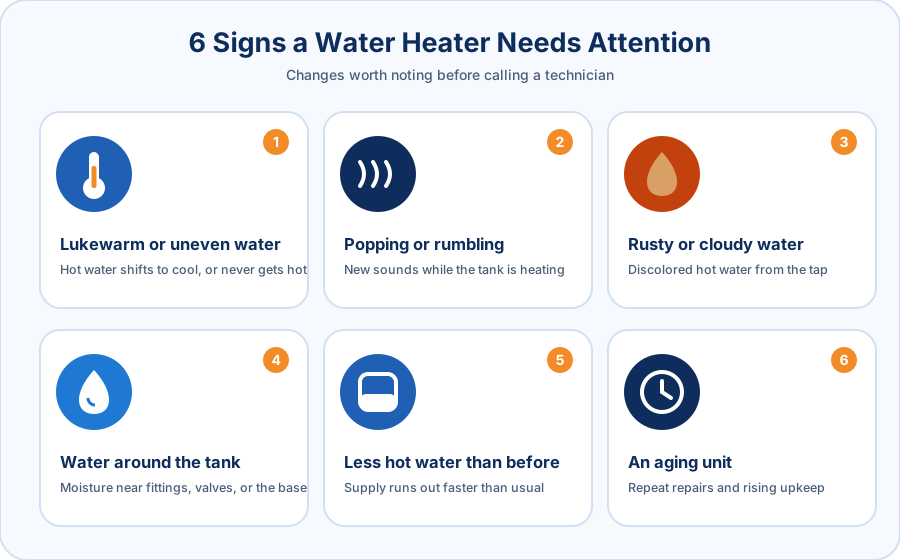
- Popping or rumbling while the tank heats
- Hot water that runs out sooner than before
- Cloudy or gritty water from hot taps
- Rising energy use with no other explanation
How a Sediment Flush Is Carried Out Step by Step
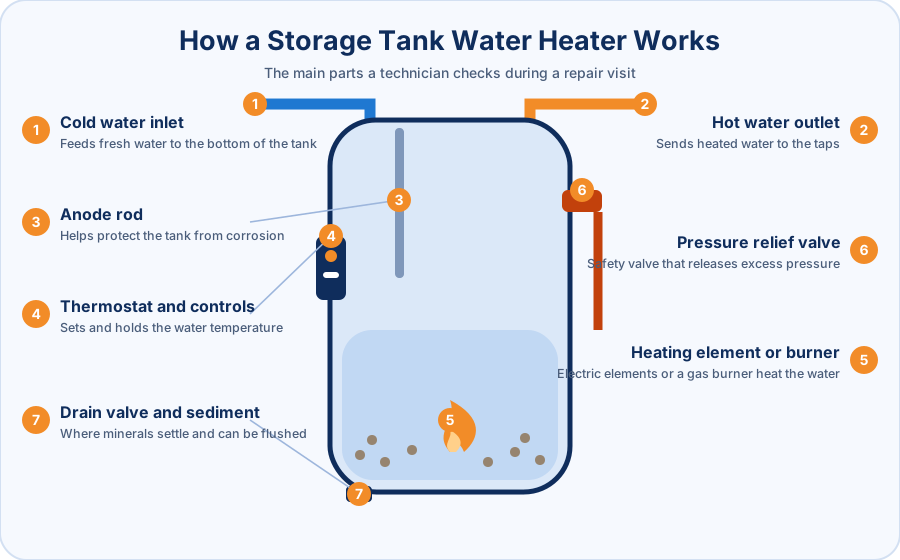
Power or gas is shut off, a hose is connected to the drain valve, and the tank is flushed until the water runs clear. The drain valve and performance are checked afterward.
How Often to Schedule Flushing and Upkeep
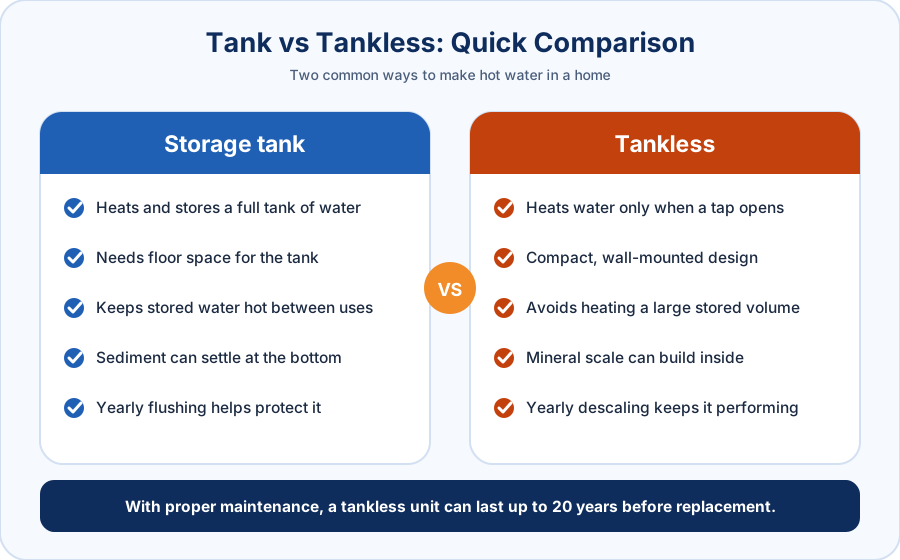
A yearly flush is the common recommendation, with extra checks when sediment is heavy. Tankless units need yearly descaling for the same reason.
Service Guides Related to Sediment Buildup
Continue with sediment flushing, noise diagnosis, or electric unit repair, or return to the Littleton hot water repair overview.